Ensuring Your Baby's Safety: A Guide to Sterilisers for Moms
Becoming a new mom is a beautiful journey filled with decisions aimed at keeping your baby safe. One key task is sterilising baby bottles, pacifiers, and feeding equipment. Improper sterilisation can expose your baby to harmful bacteria, causing upset stomachs or infections. With modern technology, sterilisers now make this process easier and more efficient.
Why sterilisation is Important
Bacteria from tap water, milk residue, or unwashed hands can cause infections in babies, whose immune systems are still developing. Adults may fend off such germs, but babies are more vulnerable. Sterilising feeding equipment and practicing good hygiene helps prevent illness. Once your baby turns one, their immune system will be stronger, and sterilisation may no longer be needed.
Benefits of using sterilisers
- Eliminates Harmful Germs: Sterilisers help remove bacteria, viruses, and other harmful pathogens from baby bottles, pacifiers, breast pump parts, and other feeding equipment, reducing the risk of infections in babies with underdeveloped immune systems.
- Saves Time: Compared to traditional methods like boiling water, using a steriliser is much more efficient and convenient. With a larger capacity, it can sterilise multiple items at once, freeing up time for mums and allowing them to focus on other tasks.
- Ensures Thorough Sterilisation: Sterilisers offer consistent, thorough sterilisation, making sure that all surfaces of feeding equipment are properly sanitised, which is harder to achieve with manual cleaning.
- Chemical-Free: Steam sterilisers, in particular, do not require any harsh chemicals, making them a safe and eco-friendly option for cleaning baby gear.
- Portable Options: Some sterilisers are compact and portable, which is convenient for travelling. This allows mums to sterilise items on the go while ensuring baby products stay clean wherever you are.
- Multi-Use: Many modern sterilisers can also be used for other items such as toys and teethers, making them versatile tools in a busy mum’s routine.
- Peace of Mind: Knowing that feeding equipment is properly sterilised helps reduce worry about infections, allowing mums to focus more on bonding with their baby.
Methods to sterilise equipment
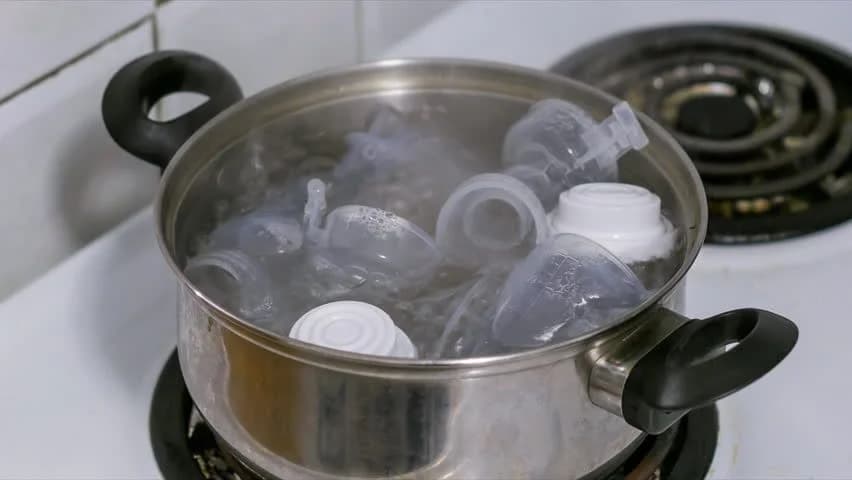
Boiling Method
Heating water to 100°C for 20 minutes kills most bacteria. This method is simple but time-consuming and requires constant supervision.
• Pros: Easy, cost-effective.
• Cons: Time-consuming, requires supervision, not suitable for all materials.
Microwave Sterilisers
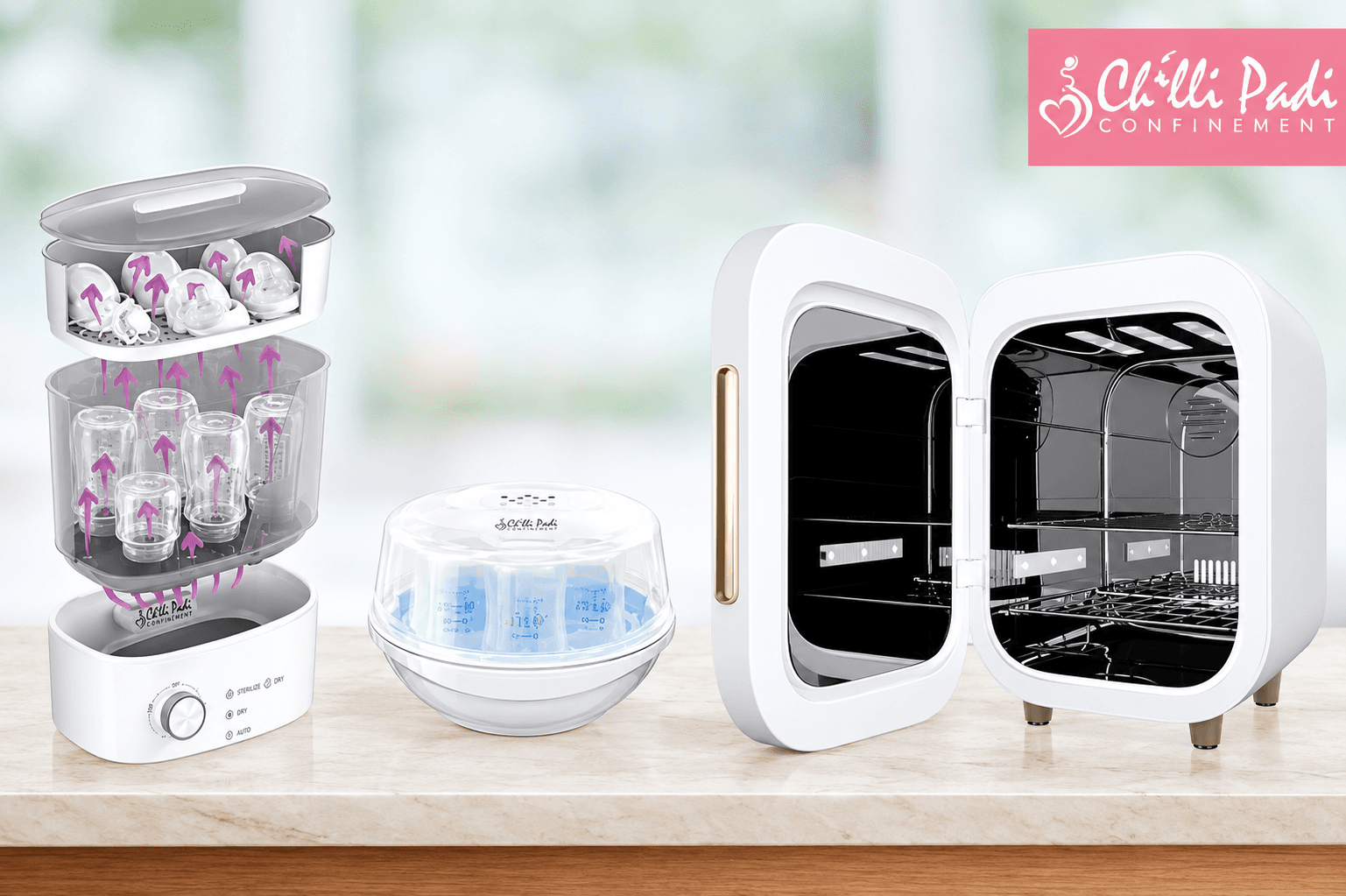
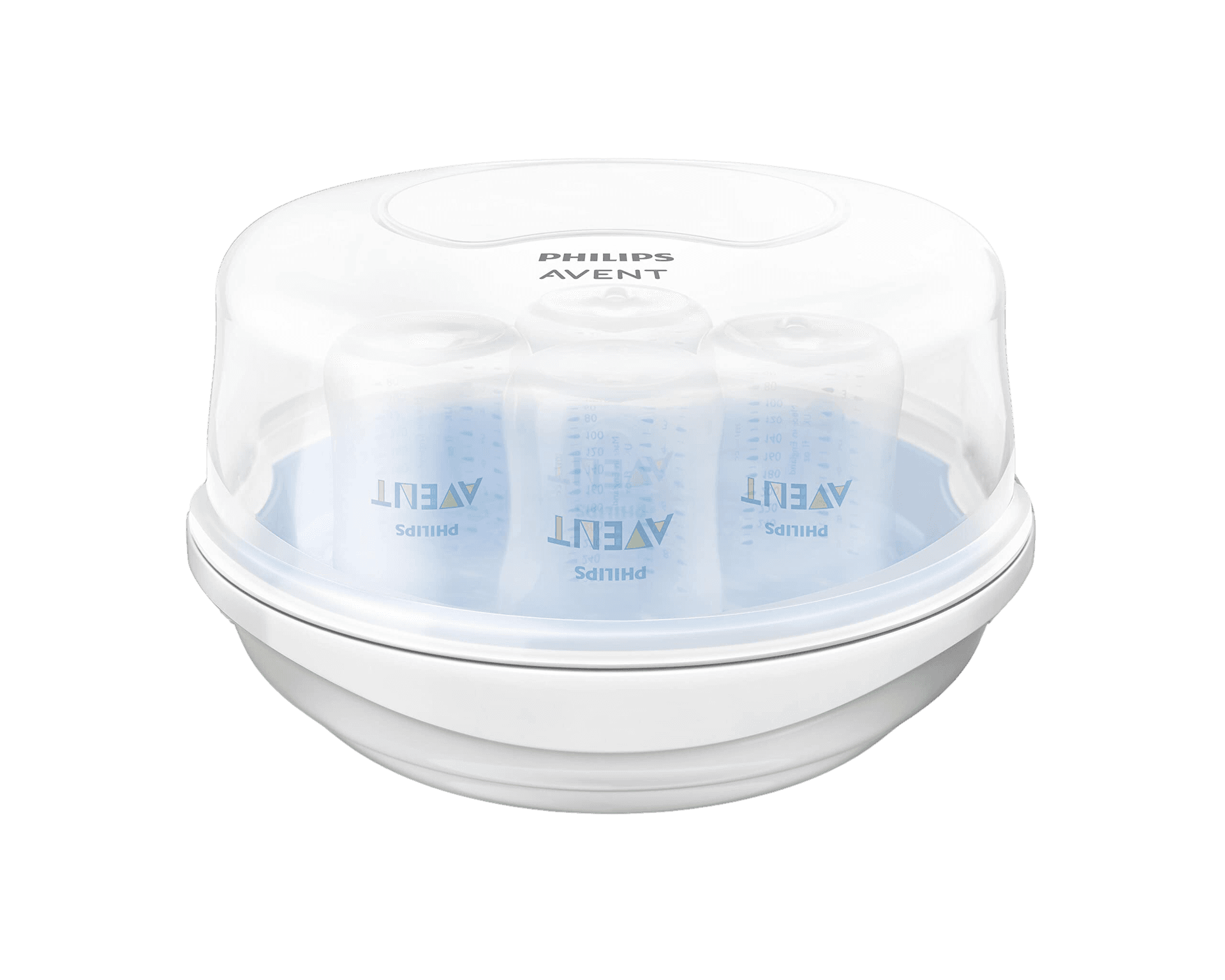
Microwave sterilisers use steam to sterilise baby feeding equipment. Follow the manufacturer’s instructions.
• Pros: Quick and fairly inexpensive.
• Cons: Not suitable for all materials; requires a suitable microwave.
Electric Steam Sterilisers
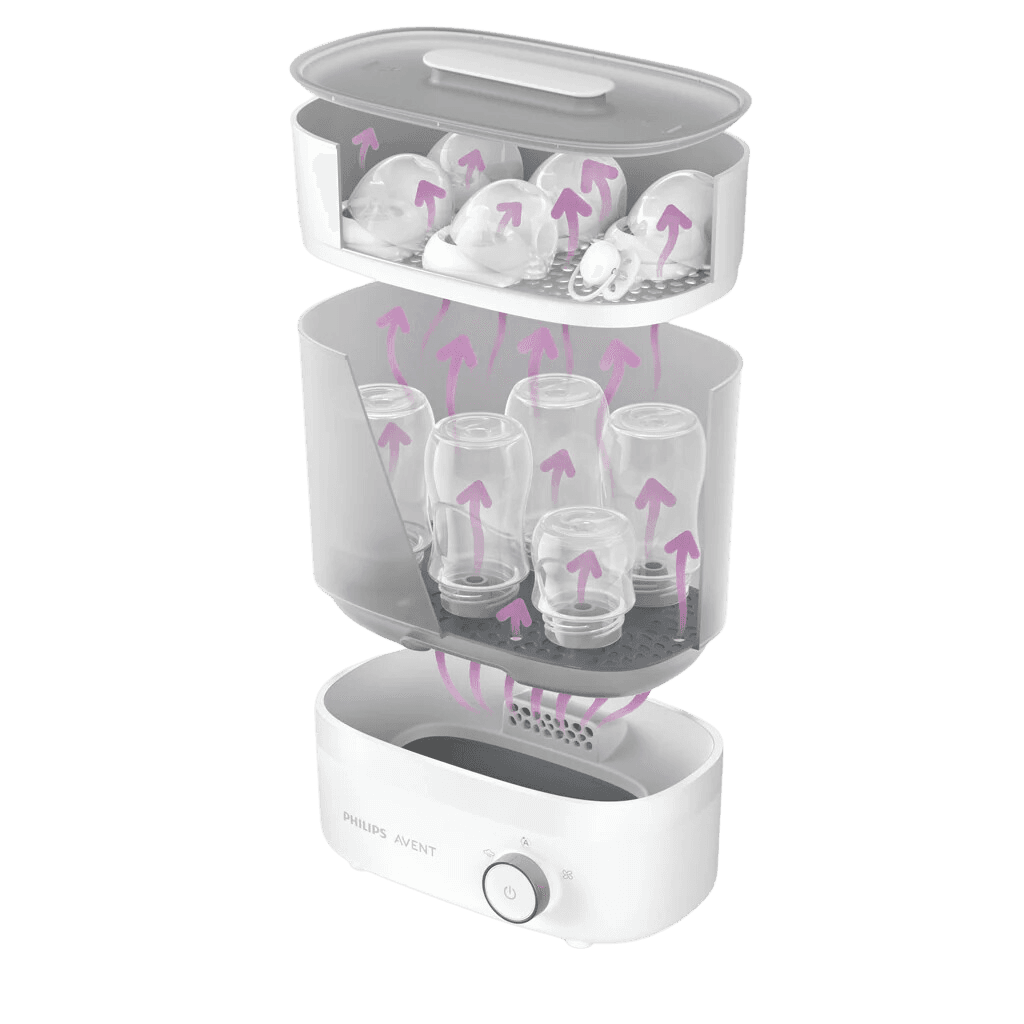
These plug-in devices use steam, requiring no chemicals or rinsing. They are highly effective and can keep items sterile for up to 24 hours with the lid closed. Some models even include an integrated dryer.
• Pros: Non-toxic, large capacity, fast (8-15 minutes)
• Cons: Can degrade plastics over time, requires maintenance.
UV Sterilisers
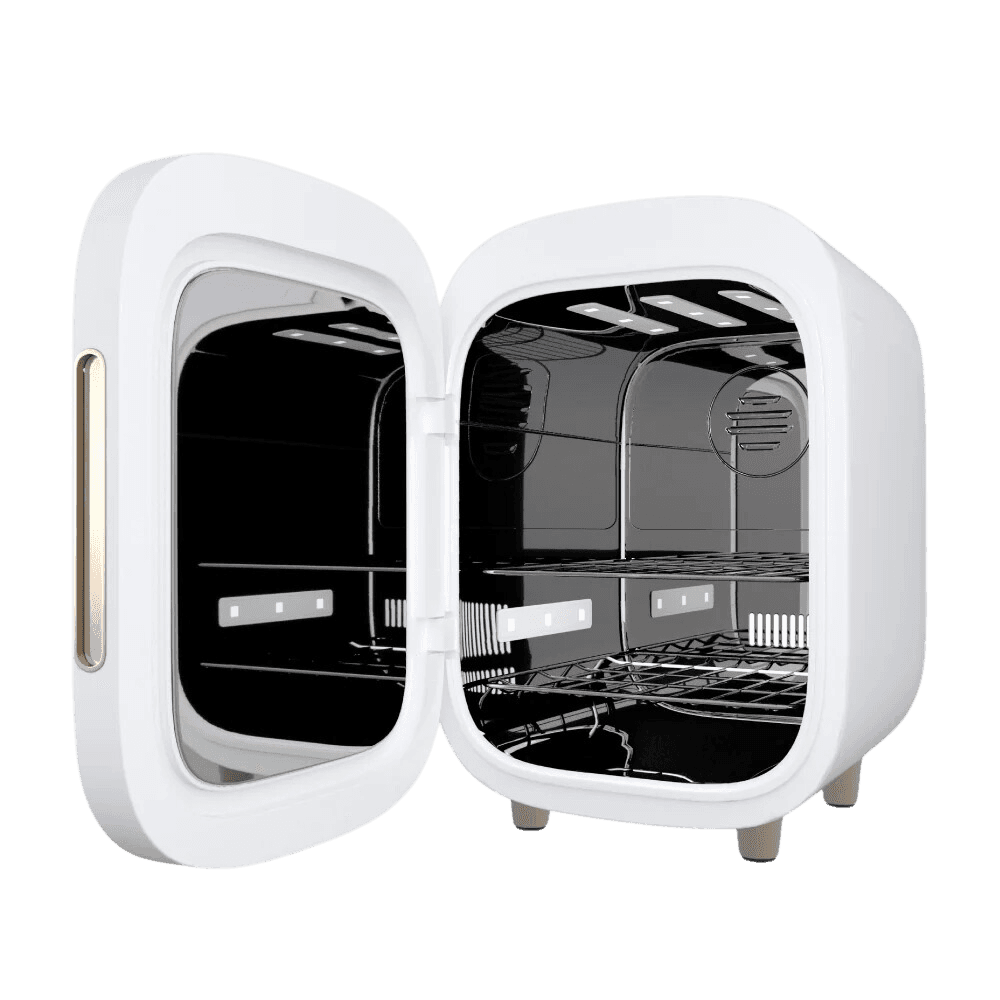
UV sterilisers use ultraviolet light, making them water-free and ideal for tech-savvy parents. However, they may be less effective on items with complex shapes and generally have smaller capacities.
• Pros: Portable, convenient, fast (10 minutes)
• Cons: Small capacity, less effective on irregularly shaped items, requires maintenance.